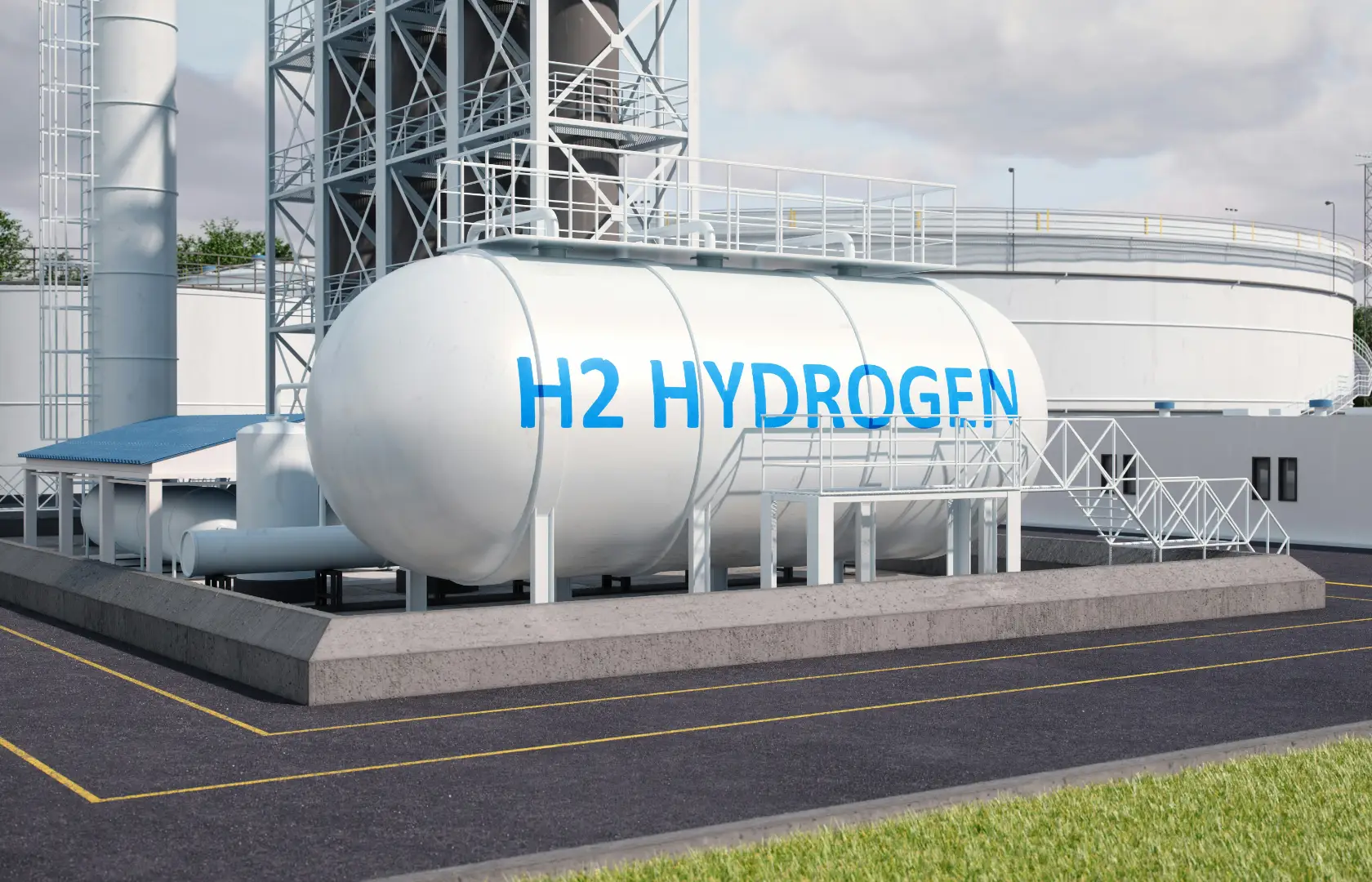
Components for hydrogen plants
Valves, flanges and gaskets for H2 projects: refining, ammonia, H2-methane blending, biomethane upgrading, DRI steelmaking, fuel cells and Hydrogen Refueling Stations at 350/700 bar. ISO 11114-certified anti-embrittlement materials, Ribel and Klinger brands. Technical partner for the Italian Hydrogen Valleys.
Hydrogen: the energy carrier of the transition
Hydrogen is the cornerstone of the European decarbonization strategy for 2030 and 2050. Reg. (EU) 2024/1789, REPowerEU, the Hydrogen Bank, and Italy's PNRR Mission 2 Component 2 have mobilized substantial funding for green hydrogen production, distribution infrastructure, industrial applications and Hydrogen Refueling Stations. Italy, thanks to its Mediterranean position and manufacturing industry, is one of Europe's highest-potential markets.
For operators designing, building or operating hydrogen plants the challenge is twofold: technical (anti-embrittlement material selection, sealing for 0.29 nm H2 molecules, ATEX zone classification, safety device sizing) and regulatory (PED categories III/IV, ISO 11114, ISO 19880, ANSI/ASME, NACE MR0175, INAIL/HSE authorizations). Roffia operates as a technical-application partner: we supply certified components, engineering sizing, documentary support for audits and inspections.
Our H2 portfolio is built on two reference brands: Ribel for industrial valves (safety, ball, bellow seal, special shutoff) and Klinger for gaskets and seals (spiral wound, RTJ, PTFE, graphite). We distribute both in Italy with MTR, lot traceability and complete H2-service dossier.
Hydrogen Valleys & PNRR opportunities
Italy's PNRR has allocated significant funding for the creation of Hydrogen Valleys throughout the country: integrated industrial hubs for production, distribution and use of green hydrogen. Lombardy, Emilia-Romagna, Piedmont, Apulia, Sicily and Sardinia are the most advanced regions. Roffia, headquartered in Cremona, is a reference partner for component supply on Northern Italy projects, with stock availability, compliant dossiers and lead times compatible with PNRR milestones.
Products for the hydrogen sector
Safety relief valves for hydrogen
Safety valves in PED category III and IV for H2 service: free sizing per EN ISO 4126-1, anti-embrittlement materials (AISI 316L, Inconel 625), ANSI Class 150–1500 connections. Ribel brand, complete PED dossier.
Hydrogen ball valves ANSI
Trunnion-mounted ball valves for high-pressure H2: fire-safe API 607, anti-static, ANSI B16.5 Class 150–2500, pure PTFE or metal-to-metal seats. For shutoff, blending, biomethane upgrading, refining. Ribel brand.
RTJ ring-type-joint flanges
Ring Type Joint flanges R, RX, BX for Class 600–2500: permanent metal-to-metal sealing for high-pressure H2, HRS 350/700 bar, ammonia, oil & gas. F316L, F22, Inconel 625/718 materials. ASME B16.5, B16.20, API 6A compliant.
ANSI flanges for hydrogen
ANSI/ASME B16.5 and B16.47 flanges in H2-compatible materials (F316L, F22, Inconel), Class 150–2500, types WN/SO/Blind/LJ/SW. H2-service dossier with MTR 3.1/3.2 and ISO 11114-1 declaration.
Klinger gaskets for hydrogen
Klinger gaskets H2-qualified: spiral wound CG/CGI type, RTJ rings in 316L/Inconel, expanded pure PTFE, pure graphite. Compliant with ISO 11114-2, TA-Luft, ASME PCC-1 with certified gasket factors.
H2-compatible stainless fittings
Butt-weld, threaded and forged fittings in AISI 316L for high-pressure hydrogen lines. ASME B16.9, B16.11, ISO 11114 compliant. MTR and full traceability.
Hydrogen industrial applications
Refining and petrochemicals
H2 produced via SMR (Steam Methane Reforming) and POX, used in hydrocracking, hydrotreating, fuel desulfurization. F22 and F11 materials per API RP 941 (Nelson curves). ANSI Class 600–1500, RTJ mandatory above Class 600. Roffia supplies components for refining plants in Central and Northern Italy.
Ammonia and fertilizers
NH3 synthesis with Haber-Bosch process at 200–400 bar and 400–500 °C. Inconel 625/718, F22, nickel-base alloys resistant to high-pressure H2 + N2 service. Components for agro-chemical and fertilizer plants.
H2-methane gas grid blending
Green H2 injection in Snam natural gas networks: today authorized up to 5% on selected pipelines, target 10–20% by 2030. Network pressures 5–75 bar. Components for valve stations, mixing skids, and pressure reduction cabinets suitable for H2 service.
Biomethane upgrading and power-to-gas
Biogas → biomethane upgrading with CO2 + green H2 methanation. See also our biogas and biomethane page. Pressures 4–80 bar, AISI 316L for H2 and biomethane-rich lines.
DRI steelmaking
Direct Reduced Iron with H2 instead of coke: steel decarbonization. Medium pressures (5–20 bar), high temperatures (~900 °C). F22, F91 and Inconel for creep-resistant service.
Hydrogen Refueling Stations (HRS)
H2 refueling stations at 350 bar (heavy-duty vehicles, buses) and 700 bar (passenger cars). Compliant with ISO 19880-1/-3, SAE J2601. ANSI Class 1500/2500, Inconel 718 for high-pressure components. Roffia supports HRS projects with dossiers for MIT/HSE authorization.
Fuel cells and power generation
PEM, SOFC and MCFC fuel cells for stationary power generation, cogeneration, backup power. High-purity H2 requires components with certified internal finishes, no contaminating catalysts, 316L or Inconel materials.
Glass, ceramics and industrial combustion
Replacement of methane with H2 (or H2-methane blends) as fuel in industrial furnaces to reduce CO2 emissions. Dedicated burners, ISO 23551-class on/off valves for fuel gases.
Technical challenges of hydrogen service
Hydrogen embrittlement
H2 atoms penetrate the metal crystal lattice causing brittle fracture. Material selection per ISO 11114-1/-4: 316L austenitics, Inconel; avoid carbon steels above 40 bar.
Sealing for tiny molecules
H2 is the smallest molecule (0.29 nm). Qualified gaskets are required (CGI spiral wound, metal RTJ) along with stringent leakage classes (API 527 for safety, ISO 5208 class A for ball valves).
Extremely wide explosive range
H2-air mixtures are flammable from 4% to 75% v/v, with minimum ignition energy 0.02 mJ. Required: ATEX zone control, BS 5146 anti-static design, Ex-certified accessories.
Brand partners for the hydrogen sector
Ribel — industrial valves
Italian manufacturer of safety, ball, bellow seal and special valves for severe service. H2-dedicated line with ISO 11114-qualified materials, fire-safe API 607, anti-static, PED III/IV certified. Official catalog: ribelvalvole.it.
Klinger — gaskets and seals
World-leading historic supplier (since 1886) of industrial gaskets. Spiral wound, RTJ, kammprofile, expanded pure PTFE, graphite — all ISO 11114-2, TA-Luft, ASME PCC-1 qualified with certified gasket factors for bolt torque calculation.
Domande frequenti
Which components are required for a hydrogen plant?
What are the main industrial applications of hydrogen in Europe?
What are the Italian Hydrogen Valleys funded by PNRR?
What is hydrogen embrittlement and why is it critical for component selection?
Does Roffia supply certified components for Hydrogen Refueling Stations (HRS)?
Which certifications and standards are mandatory for hydrogen components?
Does Roffia operate throughout Italy on hydrogen projects?
Hydrogen project? Let's talk
Send us project specifications (application, pressure, temperature, ANSI/PED classes, standards). We provide technical selection, sizing, complete H2-service dossier and commissioning support. For Hydrogen Valleys, HRS, biomethane upgrading and industrial plants.