Pilot-Operated Steam Pressure Reducers

High-accuracy pressure control for main steam lines and critical processes. Stable outlet pressure across wide load variations.

Precision steam pressure control

Pilot-operated pressure reducing valves (PRVs) use a separate pilot mechanism to sense downstream pressure and control the main valve position. This design delivers exceptional accuracy — typically ±0.1 bar or ±2% — regardless of load changes.

Unlike direct-acting reducers where outlet pressure rises with flow ("droop"), pilot-operated valves maintain a flat characteristic curve: outlet pressure remains stable from minimum to maximum flow.

Roffia distributes Spirax Sarco Series 25 pilot-operated reducers — the industry standard for steam pressure reduction in industrial plants worldwide.
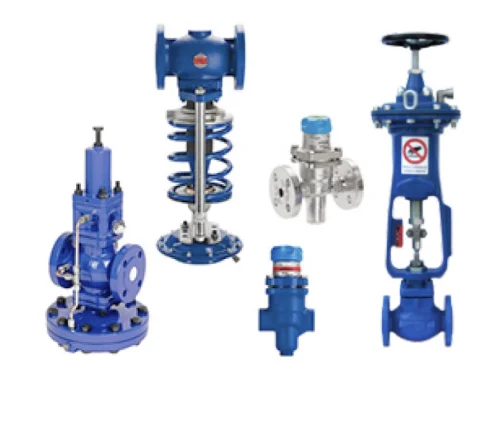
Pilot-operated steam pressure reducer Spirax Sarco — Roffia srl

Technical specifications — Spirax Sarco Series 25

Pressure and temperature

  • Max inlet pressure: 25 bar
  • Outlet pressure range: 0.2 – 17 bar (adjustable)
  • Max temperature: 250°C (saturated steam)
  • Accuracy: ±0.1 bar / ±2%
  • Max turndown: 10:1

Construction

  • Connections: Flanged DN 15-150 (PN 16/25/40)
  • Body: Cast iron, ductile iron, cast steel
  • Seat/plug: Stainless steel
  • Diaphragm: PTFE-faced stainless steel
  • Pilot: External, replaceable

Typical installation — Steam reducing station

Isolation valve
Y-strainer
PRV
Safety valve
Isolation valve

Include pressure gauges before and after the PRV. Install a steam trap on the upstream drip leg.

Applications

Main steam distribution

Central reducing stations feeding multiple process areas at controlled pressure.

Critical processes

Autoclaves, sterilizers, reactors requiring precise and stable steam pressure.

Variable loads

Applications where demand varies widely — pilot-operated valves maintain accuracy at all loads.

Domande frequenti

How does a pilot-operated pressure reducing valve work?
In a pilot-operated PRV, a small pilot valve senses downstream pressure and controls the main valve opening. When downstream pressure drops, the pilot opens, allowing steam to act on the main valve diaphragm, opening it. When downstream pressure rises, the pilot closes, the main valve closes. The pilot amplifies small pressure changes into large valve movements, providing excellent accuracy (±0,1 bar) even with large flow variations. The main valve sees only a fraction of the differential pressure, reducing wear.
What is the difference between pilot-operated and direct-acting PRVs?
Pilot-operated: higher accuracy (±0,1 bar vs ±0,5 bar), stable outlet pressure over large flow ranges, suitable for high capacities. More complex, higher cost. Direct-acting: simpler, fewer parts, lower cost, compact. Outlet pressure rises with flow (droop). Best for small to medium flows where accuracy is not critical. Choose pilot-operated for main steam distribution, critical processes, large loads; choose direct-acting for individual equipment, small loads, cost-sensitive applications.
How do I size a pilot-operated steam pressure reducer?
Key parameters: maximum steam flow (kg/h), inlet pressure (P1), required outlet pressure (P2), and steam temperature. Calculate the required Kvs using the manufacturer's sizing charts or software. For pressure ratios >10:1 (e.g., 10 bar to 0.5 bar), use two reducers in series to avoid excessive velocity, noise and potential thermal shock. Our technical team can assist with sizing.
What pressure reduction ratio is achievable with a single valve?
Most pilot-operated PRVs are designed for ratios up to 10:1 (turndown). Higher ratios cause high velocity through the seat (noise, erosion) and risk thermal shock from wet steam. For example: 10 bar → 1 bar is acceptable; 14 bar → 0.5 bar (28:1) should use two stages. Spirax Sarco Series 25 handles up to 10:1 comfortably; for higher ratios, install an intermediate PRV.
Why install a filter upstream of the pressure reducer?
Scale, rust, and debris in steam can damage the valve seat and plug, causing leakage and inaccurate regulation. A Y-strainer (0.5–1 mm mesh) upstream protects the PRV. For pilot-operated valves, clean steam is especially important as the pilot has small passages that can clog. Include isolation valves upstream and downstream for maintenance access.
Which Spirax Sarco model do you recommend?
For pilot-operated steam pressure reduction, Spirax Sarco Series 25 is the industry standard. Available in DN 15–150 (flanged), inlet up to 25 bar, outlet 0.2–17 bar. Accuracy ±2% of set point. Self-draining body. External pilot for easy access. Roffia stocks the most common sizes; other configurations on request.

Need pilot-operated steam pressure reducers?

Contact us with your application details: inlet/outlet pressure, flow rate, temperature. We'll help you select and size the right valve.

Privacy Policy Cookie Policy