Plastic Valves — PVC, PP, PVDF
Chemical-resistant thermoplastic ball, butterfly and diaphragm valves for aggressive fluids, water treatment, pharmaceutical and ultra-pure processes. FIP and other leading brands.
Why choose thermoplastic valves?
Thermoplastic valves offer a unique combination of properties that metals cannot match in chemically aggressive environments: broad chemical resistance — PVC, PP and especially PVDF are inert to most acids, alkalis, oxidising agents and many solvents that would rapidly corrode even high-alloy stainless steels. In processes handling hydrochloric acid, sulphuric acid, sodium hypochlorite, caustic soda or ultra-pure water at room temperature, thermoplastic valves are often the only technically and economically viable choice.
Beyond chemical resistance, plastic valves offer: low weight (a DN 100 PVC butterfly valve weighs 15–20% of the equivalent ductile iron valve — important for large overhead installations); low cost of ownership (no painting or external corrosion protection required; no electrolytic corrosion from stray currents); electrical insulation (relevant in electroplating, battery manufacturing, cathodic protection zones); and no metal ion contamination (critical in ultra-pure water for semiconductor and pharmaceutical use).
Roffia distributes FIP (Formatura Iniezione Polimeri) thermoplastic valves — Italy's leading manufacturer of PVC, PP and PVDF industrial valves — directly from our Cremona warehouse, with standard sizes available for same-day dispatch.
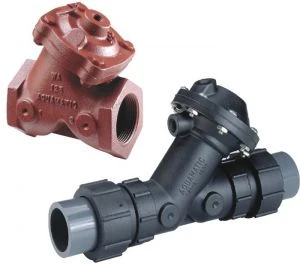
PVC-U ball valves
- DN 15–100 (½"–4"), PN 10/16
- Full-bore, PTFE seats, EPDM or FKM O-rings
- Threaded (BSP) and solvent-cement socket ends
- True-union (2-piece) for easy in-line removal
- Potable water approved (WRAS, KTW, ACS)
- Temperature range: -10 °C to +60 °C
PP / PVDF butterfly valves
- DN 50–300, PN 10
- Body and disc: PP-H or PVDF
- Fully lined design (no metal contact with fluid)
- EPDM, FKM or PTFE seat liner
- Manual lever/gearbox or pneumatic actuation
- Temperature: PP to +90 °C, PVDF to +140 °C
PVDF diaphragm valves
- DN 15–100, for aggressive media
- Full-bore, no dead legs (hygienic design)
- Diaphragm: PTFE, EPDM, FKM
- Excellent for slurries, aggressive acids
- Manual and pneumatic versions
- Suitable for ultra-pure water and pharma
Application sectors
Chemical and pharmaceutical industry
The chemical and pharmaceutical sector is the primary user of PVDF and PP valves. Common applications: sulphuric acid storage and dosing (up to 96% concentration), hydrochloric acid (HCl) transfer lines, sodium hypochlorite (bleach) dosing, ferric chloride in PCB manufacturing, hydrogen peroxide (H₂O₂) dosing in water treatment, and pharmaceutical API production where metal contamination is prohibited.
Water treatment and swimming pools
Municipal water treatment and industrial water purification systems use PVC and PP butterfly and ball valves extensively on chlorination, coagulant dosing, pH correction and reverse osmosis systems. Swimming pool and spa installations use PVC valves for chlorine, salt electrolysis and UV systems. Potable water certification (KTW, WRAS, ACS) is standard for these FIP products.
Semiconductor and photovoltaic
Ultra-pure water (UPW) systems and chemical distribution in semiconductor fabs require PVDF valves with minimal extractables and the highest purity standards. PVDF's resistance to RCA cleaning solutions (HF, HCl, H₂O₂), piranha etch (H₂SO₄ + H₂O₂) and KOH makes it the sole viable material for these applications.
Electroplating and surface treatment
In galvanic plants and surface treatment (chrome plating, nickel plating, anodising, phosphating), the process tanks contain concentrated acids, alkalis and metal salts. PVC is the standard material for chromic acid to 250 g/L; PP for acids at elevated temperature (up to 80 °C); PVDF for fluoride-based etchants and fuming nitric acid that attack PVC and PP.
Frequently asked questions
When should plastic valves be used instead of metal valves?
What is the difference between PVC, PP and PVDF valves?
What pressure and temperature limits apply to plastic valves?
Are FIP brand plastic valves suitable for drinking water?
Need chemical-resistant valves?
Tell us the chemical name or composition, concentration, temperature, DN, pressure rating and connection type. We will confirm the correct plastic material and supply from stock.