Piston Valves
High-reliability isolation for steam, superheated water and process fluids. Metal-to-metal seal assisted by system pressure — the higher the pressure, the tighter the seal.
How piston valves work
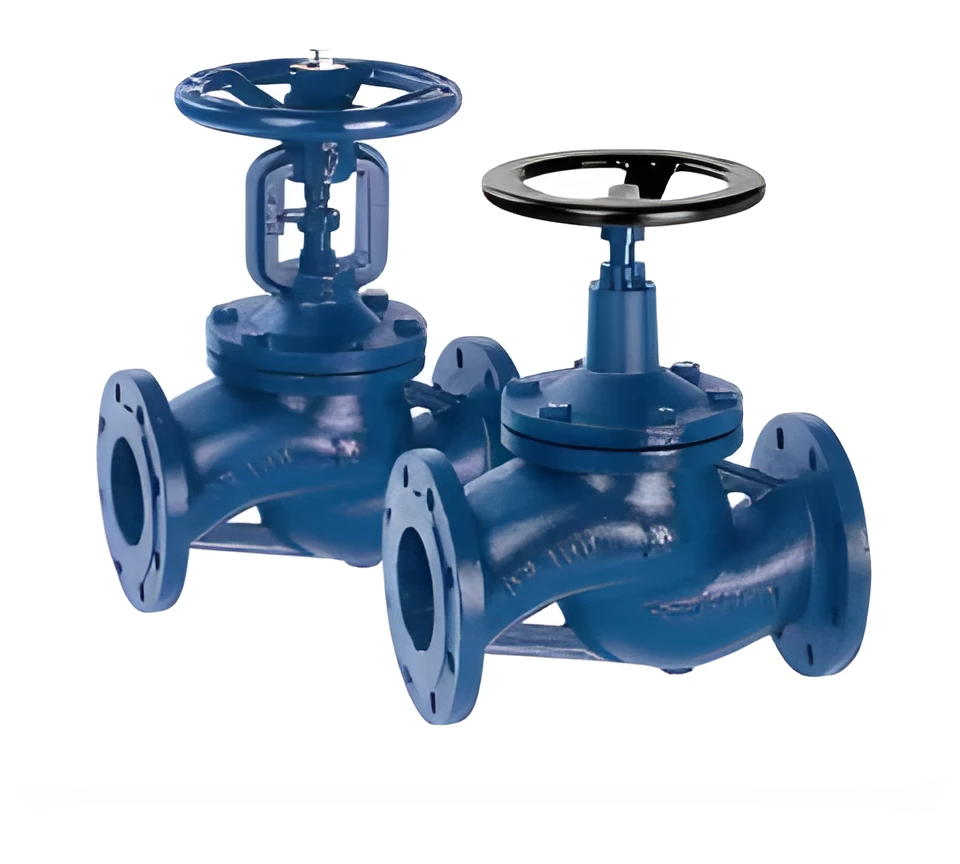
Piston valves (also known as pressure-assisted valves or flow-actuated valves) are linear valves in which the fluid pressure acts on the plug in the same direction as the closing force. When the valve is closed, the differential pressure between upstream and downstream pushes the plug against its seat, creating a self-reinforcing metal-to-metal seal: the higher the pressure, the tighter the closure.
This principle makes piston valves ideal for high-pressure steam, superheated water and hot process fluids, where a perfect seal is essential even after thousands of operating cycles. Opening requires overcoming the pressure force, but once open the valve provides a straight flow path with moderate pressure drop.
Roffia supplies piston valves in ductile iron, carbon steel and stainless steel, with stellite-faced seats for maximum wear resistance. Available from DN 15 to DN 200, with pressure ratings up to PN 100 and temperatures up to 450 °C.
Body materials
- Ductile iron GGG40 — economical, for steam up to PN 16
- Carbon steel A216 WCB — standard for steam and superheated water
- Forged steel A105 — high pressure, critical applications
- Stainless steel A351 CF8M — corrosion resistance, chemical fluids
- Special alloys — Inconel, Monel for extreme services
Seat and plug
- Stellite 6 — standard hard-facing, maximum life
- Hardened stainless steel — economical alternative
- Inconel 625 — high temperature resistance
- Lapped metal-to-metal seal
- Leakage class VI (bubble-tight) per EN 12266
Technical specifications
- DN: 15–200 mm
- PN: 16, 25, 40, 63, 100
- Temperature: up to 450 °C
- Connections: EN 1092-1 flange, ANSI B16.5, threaded
- Certifications: PED 2014/68/EU, EN 12516
Typical applications
High-pressure steam lines
Piston valves are the optimal choice for main isolation on steam headers and branch lines at 25–60 bar. The pressure-assisted seal ensures zero leakage even after years of service, reducing energy waste and operating costs. Also ideal as bypass around control valves: when the bypass is closed, system steam pressure maintains a perfect seal.
Power plants and cogeneration
In thermal power plants and cogeneration facilities, piston valves are used on turbine extraction lines, steam distribution headers and superheated water circuits. Robust construction and simple mechanics guarantee long-term reliability with minimal maintenance.
Chemical and petrochemical industry
In the chemical and pharmaceutical sector and petrochemical industry, stainless steel or special alloy piston valves are used on process steam lines, high-temperature thermal fluids and corrosive vapour services. Available with ATEX certification for classified zones.
Boiler and tank blowdown
For boiler bottom blowdown and pressure vessel draining, piston valves ensure safe closure even in the presence of sediment and scale. The plug movement exerts a self-cleaning action on the seat, maintaining sealing efficiency over time.
Roffia piston valve range
DN 15–150, PN 16
DN 15–200, PN 25–40
DN 15–100, PN 63–100
DN 15–100, PN 16–40
Automatic on-off control
Easier operation
For solidifying fluids
Open/closed display
Frequently asked questions
What is the difference between a piston valve and a check valve?
When should piston valves be used instead of ball or gate valves?
What materials are available for piston valves?
How do I size a piston valve for steam service?
Do piston valves require special maintenance?
Request a piston valve quote
Please provide DN, PN, material, operating temperature, connection type and fluid. We will select the correct valve and send you a quotation within 24 hours.