Piston Disc Valves
High-reliability isolation for steam, superheated water and thermal oil systems. Self-adjusting expanded graphite sealing ring — minimal maintenance and exceptional service life.
How piston disc valves work
Piston disc valves are linear-motion isolation valves in which a cylindrical plug (the piston or "disc") slides inside an expanded graphite sealing ring. Unlike valves with conventional packing glands, the graphite ring wraps around the piston at 360° creating a continuous radial seal on both the stem and the seating surface.
When the valve is closed, the piston engages the graphite ring and simultaneously seats against the lower conical seat, creating a double seal. The expanded graphite is self-lubricating and gradually conforms to the piston surface, maintaining a perfect seal for years without adjustment — a decisive advantage over traditional packed valves.
Roffia supplies piston disc valves in ductile iron, carbon steel and stainless steel, in sizes from DN 15 to DN 300 with pressure ratings up to PN 40 (ANSI Class 300). Ideal for steam systems, boiler houses, district heating networks and thermal oil circuits.
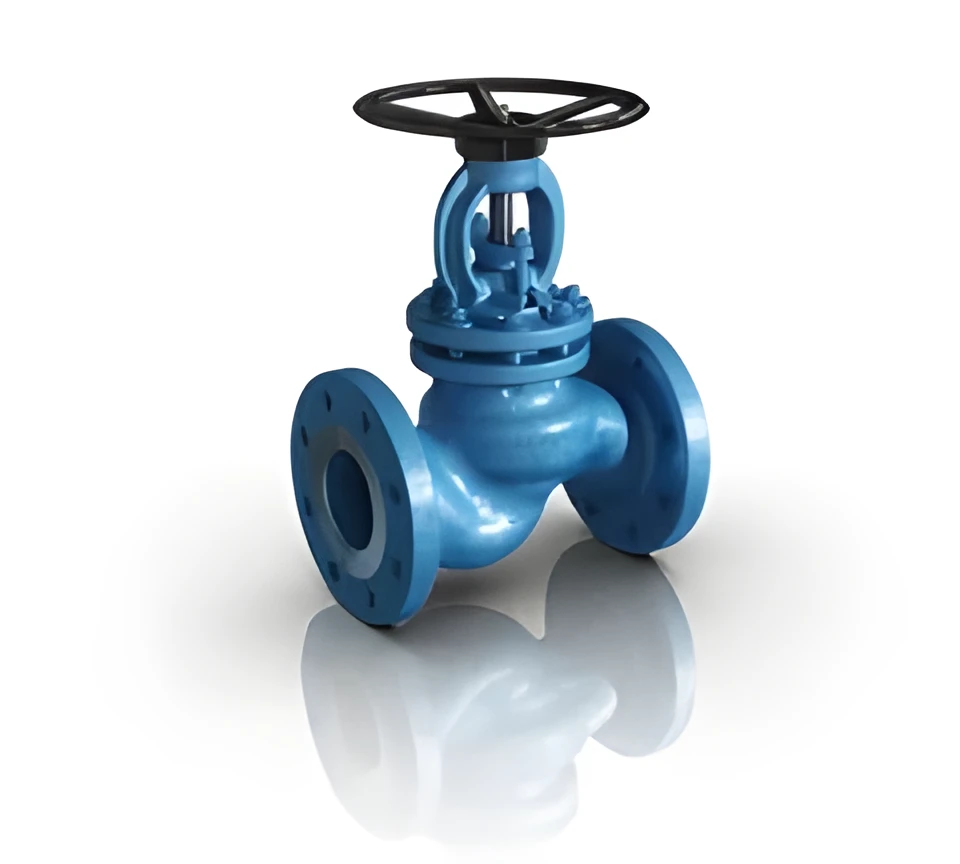
Body materials
- Ductile iron GGG40 — standard for steam, PN 16–25
- Carbon steel A216 WCB — high-pressure steam, PN 25–40
- Forged steel A105 — high-pressure applications
- Stainless steel CF8M / AISI 316 — corrosive fluids, chemical-pharmaceutical
Sealing and piston
- Expanded graphite ring — self-adjusting, up to 425 °C
- PTFE ring — for cold water and chemical fluids
- Hardened stainless steel piston — wear resistant
- Stellite-faced piston — maximum life, severe service
- Double seal: radial + conical seat
Technical specifications
- DN: 15–300 mm
- PN: 16, 25, 40
- Temperature: up to 425 °C
- Connections: EN 1092-1 flange, ANSI B16.5, threaded
- Certifications: PED 2014/68/EU
Typical applications
Steam headers and distribution
Piston disc valves are the optimal choice for isolation on main steam headers and branch lines. The graphite ring seal requires no packing adjustment and guarantees zero leakage even after years of frequent operation, reducing energy waste. Read more: choosing valves for steam systems.
Boiler houses and district heating
In centralised heating plants and district heating networks, ductile iron piston disc valves serve as main isolation valves on superheated water circuits (up to 180 °C). Robust construction ensures long-term reliability with virtually zero maintenance.
Thermal oil circuits
In thermal oil circuits up to 300 °C, carbon steel piston disc valves offer perfect sealing without the soft-seal deterioration issues typical of ball or butterfly valves at high temperatures.
Industrial process
Plants in the food & beverage, chemical-pharmaceutical and industrial sectors use AISI 316 piston disc valves for isolation on process steam lines and hot fluid services where corrosion resistance is required.
Roffia piston disc valve range
DN 15–300, PN 16–25
DN 15–200, PN 25–40
DN 15–150, PN 16–25
DN 15–50, PN 16
Automatic on-off control
Modulating control
Standard manual operation
Open / closed / intermediate
Frequently asked questions
What is the difference between a piston disc valve and a ball valve?
Why are piston disc valves preferred in steam systems?
How does the sealing work in piston disc valves?
What materials are available for piston disc valves?
Do piston disc valves require maintenance?
Request a piston disc valve quote
Please provide DN, PN, material, operating temperature, fluid type and required connections. We will select the correct valve and send you a quotation within 24 hours.