Knife Gate Valves
Full-bore, sharp-blade isolation valves for slurries, digestate, sludge, pulp and fibrous media. Essential in biogas plants, wastewater treatment and the process industry.
How knife gate valves work
A knife gate valve achieves shut-off using a thin, flat stainless steel gate (blade) that slides vertically across the pipe bore, cutting through solids and fibres in the fluid stream as it closes. The sharp lower edge of the blade acts like a knife, slicing through fibrous biomass, sludge or slurries that would jam a conventional gate valve. When fully open, the gate retracts completely behind the packing gland, leaving the pipe bore unobstructed (full-bore) and allowing free passage of solids-laden flow.
Sealing is achieved by a resilient elastomeric seat (EPDM, NBR or polyurethane) moulded or inserted into the valve body, against which the bottom edge and sides of the blade press when closed. Some designs use an external compression-type packing (stuffing box) around the gate to handle leakage past the gate in the vertical direction — especially for high-solids slurries under pressure.
Knife gate valves are available in DN 50 to DN 600 and are offered in wafer pattern (the most compact, sandwiched between flanges), lug pattern (allowing end-of-line installation) and flanged pattern. Roffia specialises in knife gate valves for biogas and biomethane plants, wastewater treatment, and industrial process applications handling difficult media.
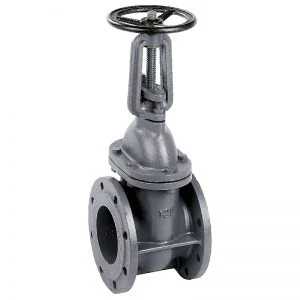
Technical specifications
- Size range: DN 50 to DN 600 standard; DN 700–1200 on request
- Pressure rating: PN 6–16 standard; PN 25 for special orders
- Body: ductile iron GGG40, AISI 304/316, carbon steel
- Blade: AISI 304, 316, 416 (hardened); hardfaced on request
- Seat: EPDM, NBR, NBR+fabric, polyurethane, PTFE
- End connections: wafer, lug, flanged (EN 1092-1 / ANSI B16.5)
- Actuation: manual handwheel, gear, pneumatic, electric, hydraulic
Industry applications
- Biogas / biomethane plants — digestate, substrate feed, biogas lines
- Wastewater treatment — raw sewage, activated sludge, biosolids
- Pulp and paper — thick stock, broke, effluent
- Mining and minerals — tailings slurry, concentrate, flotation
- Power generation — fly ash slurry, bottom ash
- Food processing — pomace, fibrous waste streams
- Chemical / pharmaceutical — catalyst slurries, pigments
Knife gate valves in biogas plants
In biogas and biomethane plants, knife gate valves are among the most critical components. They are used on substrate feed lines (where raw biomass — maize silage, organic food waste, animal slurries — enters the process), on digestate discharge lines (isolation of the digester for maintenance), on inter-tank transfer lines and on effluent treatment stages where solids concentrations are high. The biogas sector demands valves that can achieve adequate shut-off against methane-rich biogas (preventing fugitive GHG emissions) while handling fibrous and abrasive slurries. Roffia supplies specialist knife gate valves with ATEX-rated pneumatic actuators and spring-return fail-closed configurations for safety shut-off on biogas lines.
Read more: key components for biogas plant piping →Frequently asked questions
What are knife gate valves used for?
What materials are knife gate valves made from?
Are knife gate valves bidirectional? How is sealing achieved?
What actuators are used with knife gate valves?
Need knife gate valves?
Specify the fluid (slurry, digestate, sludge, etc.), solids content, DN, PN, body material, seat material and actuation. We will recommend the correct model and confirm availability.