Float Valves
Automatic level control in tanks, cisterns and basins. The float rises and falls with the liquid, opening and closing the supply without electrical power or manual intervention.
How float valves work
Float valves are automatic level control devices that require no electrical power, sensors or control logic. A float connected to a lever arm follows the liquid level in the tank: when the level drops, the float drops and the lever opens the supply valve; when the level rises to the set-point, the float lifts the lever and closes the valve.
The principle is simple and reliable, used for centuries: the hydrostatic buoyancy of the liquid on the float provides the driving force for opening and closing. Modulation is automatic: the valve opens proportionally to demand, maintaining a stable level even with variable consumption.
Roffia distributes float valves in brass for potable and industrial water and in stainless steel for food, chemical and high-temperature applications. Available models include lever arm with plastic or metal ball, and pilot-operated high-capacity versions for large tanks and cooling towers.
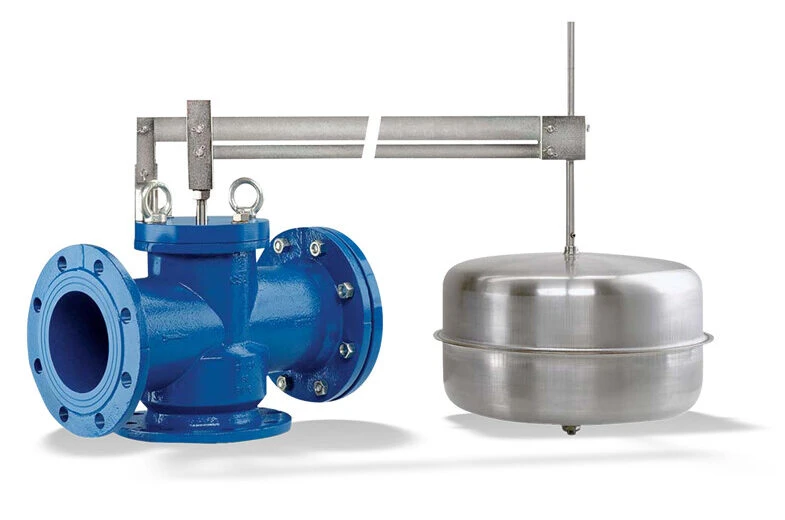
Lever arm and ball valves
- Spherical float in plastic or stainless steel
- Adjustable arm length
- Body in brass or stainless steel
- DN 10–50, pressure up to PN 16
- Ideal for small to medium tanks
- Side or top mounting
Pilot-operated (high capacity)
- Pilot float separate from main valve
- High-capacity main valve
- DN 50–150, flow up to 200+ m³/h
- Fine adjustment of shut-off level
- Cooling towers, industrial tanks
- Robust construction, low maintenance
Technical specifications
- DN: 10–150 mm (3/8"–6")
- PN: 6, 10, 16 bar
- Temperature: up to 80 °C (120 °C stainless)
- Connections: BSP threaded, flanged
- Materials: brass, bronze, stainless AISI 316
- Floats: PP, PE, stainless steel
Typical applications
Water storage tanks and cisterns
Float valves are the standard solution for maintaining the level in water storage tanks, pressure sets, underground and overhead cisterns, and lift stations. They guarantee automatic filling without risk of overflow, without need for electrical control and with minimal maintenance.
Cooling towers
Evaporative cooling towers continuously lose water through evaporation and blowdown. Pilot-operated high-capacity float valves automatically replenish lost water, keeping the basin level within safe limits. Roffia supplies specific valves for cooling towers with pressures up to 6 bar.
Livestock watering and agriculture
For automatic watering troughs in stables, piggeries and poultry farms, stainless steel or food-grade plastic float valves ensure fresh water is always available without waste. Compact and robust models withstand intensive use and animal presence.
Industrial processes
Process tanks, galvanic baths, surface treatment plants, washing and cooling circuits in the manufacturing industry. For chemical fluids, stainless steel 316L or PTFE-lined versions are available with corrosion-resistant floats.
Roffia float valve range
DN 10–50, domestic water
DN 10–40, food and chemical
DN 40–150, cooling towers
For small tanks
Integrated backflow prevention
Customisable level
Bottom-of-tank mounting
Floats, seals, levers
Frequently asked questions
What is the difference between a lever float valve and a ball float valve?
How do I size a float valve for a tank?
Can I use a float valve for hot water or steam?
What are pilot-operated float valves and when are they used?
How often should a float valve be inspected?
Request a float valve quote
Please provide tank type, required flow rate, supply pressure and fluid. We will recommend the most suitable valve and send a prompt quotation.